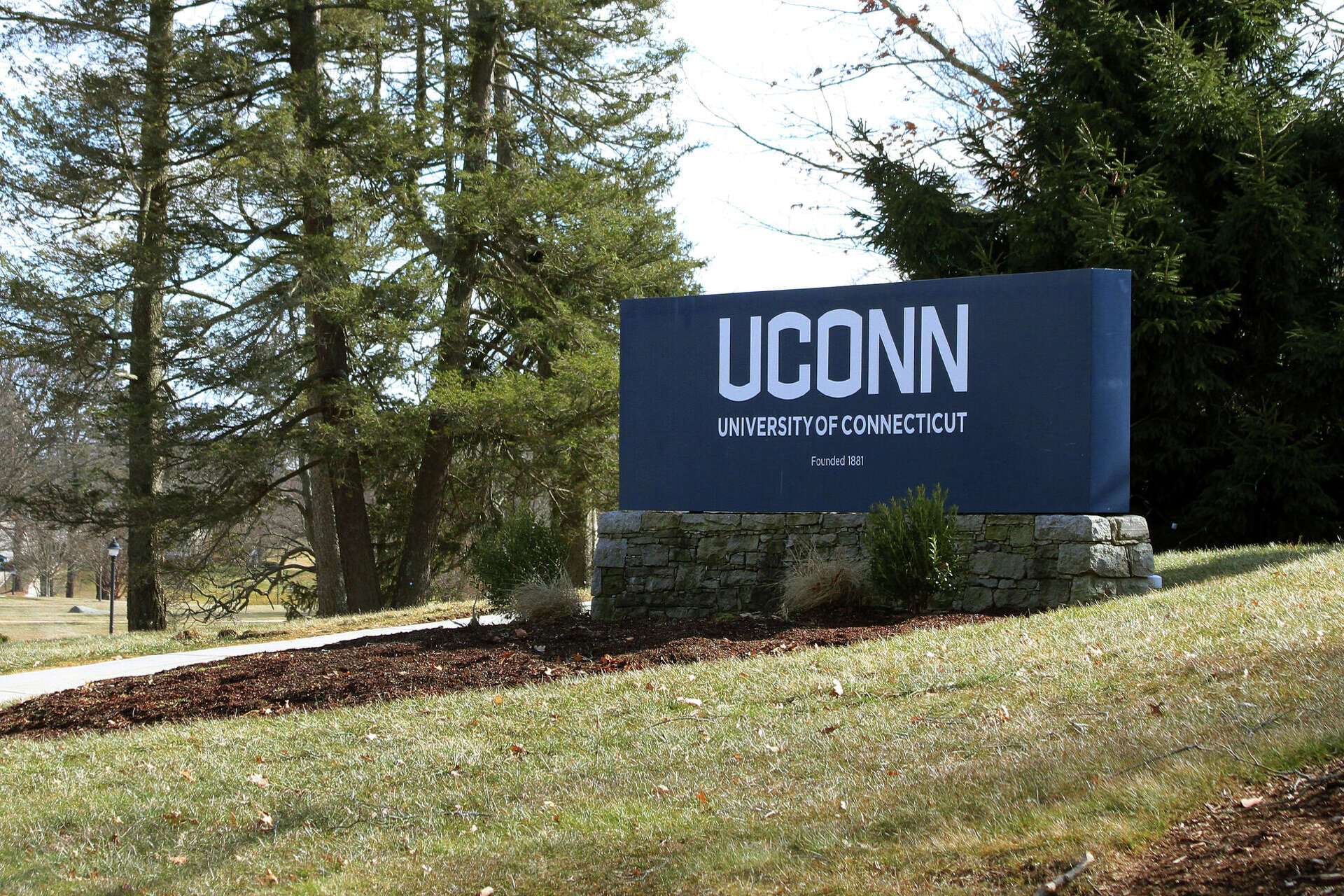
A view of UConn campus in Storrs, Conn., on Thursday Mar. 4, 2021.
Christian Abraham/Hearst Connecticut MediaA review of low-enrollment academic programs at the University of Connecticut has so far resulted in seven closures, with dozens more being monitored this coming school year.
The review has generated controversy at the university since it was underway last fall, with some faculty members and lawmakers decrying the potential cuts to majors while UConn officials describe it as a routine way to adapt to challenges.
Article continues below this ad
Anne D’Alleva, UConn's provost and executive vice president for academic affairs, presented an update on the review process during the Board of Trustees Academic Affairs Committee meeting earlier this month. D’Alleva said in the Aug. 5 meeting that this kind of review process is normal, describing it as "good academic housekeeping" to see how to continually improve academic offerings at the university.
Her update detailed which programs have been shuttered so far, which majors are discontinued and which programs will continue to be monitored this upcoming school year, as the review is expected to continue into the future.
"The goal of this process is to identify programs that may no longer align with student interest or workforce needs and determine whether such programs should be revitalized, consolidated with other offerings, or phased out with the appropriate teach-out plans as necessary," according to the August 5 update document. The review of low-enrollment and low-completion academic programs specifically targeted programs that failed to meet a five-year threshold of 100 or fewer undergraduate degree completions, 25 or fewer graduate certificate completions, 50 or fewer master’s degree completions, or 10 or fewer doctoral degree completions.
Article continues below this ad
Earlier discussions around cutting programs came as UConn was facing budget strains, in part due to the expiration of federal pandemic-relief money. Those fiscal challenges have still not eased following the passage of the new state budget and cuts from the federal level, as UConn is currently facing more than a $100 million deficit and bracing for more cuts.
For the review, faculty, department heads and deans considered student demand, enrollment and completion trends, curricular alignment, financial sustainability and market relevance, according to the Aug. 5 document. "The outcomes reflect a strategic effort to ensure that all programs contribute to the vitality of UConn’s academic mission," according to the document.
Article continues below this ad
So far, seven programs have been approved for permanent closure, three majors are being discontinued and approximately 70 programs are being monitored or expected to have future action as a result of the review, according to the August 5 update.
These seven programs were approved for permanent closure:
- Graduate Certificate in Global Health (Institute for Collaboration on Health,
Intervention, and Policy) - Graduate Certificate Obesity Prevention and Weight Management (Institute for
Collaboration on Health, Intervention, and Policy) - Graduate Certificate in School Law (Neag School of Education)
- Graduate Certificate in Addiction Sciences (School of Medicine)
- B.A. and B.S. in Applied Mathematical Sciences, BS in Mathematics-Physics (College of
Liberal Arts & Sciences) - M.A. in Politics and Popular Culture (College of Liberal Arts & Sciences)
- MA and PhD in Medieval Studies (College of Liberal Arts & Sciences)
According to the Aug. 5 document, the closures were made after consideration of factors such as persistent low enrollment, limited demand, and lack of alignment with current university priorities, as well as the review and approval of the Academic Affairs Committee.
Article continues below this ad
"And of course this is the cycle of program life, that there are programs that sometimes it is time to close them for a variety of reasons," D’Alleva said in the meeting.
Three other majors are being discontinued, as part of consolidation efforts. In the Department of Mathematics, Applied Mathematical Sciences (B.A.), Applied Mathematical Sciences (B.S.) and Mathematics-Physics (B.S.) are being discontinued, with the final term for new admissions this fall, according to the document.
"These changes streamline the department’s offerings, align more closely with peer institutions, and strengthen the core mathematics major, which now includes tracks in Pure Mathematics, Applied Mathematics, and Mathematics Teaching," according to the document. "This is a strong example of preserving robust academic options while eliminating unnecessary duplication and creating greater clarity for students, thereby supporting student success."
And those majors may not be the only ones no longer being offered at UConn. "We expect additional consolidation efforts of this kind in the upcoming academic year," the update says.
Article continues below this ad
In addition, approximately 70 programs are being monitored or expected to have future action beginning in the 2025-26 academic year, according to the update.
That means programs were approved to continue, but will be subject to focused monitoring and development of action plans aimed at improving enrollment and completion rates, undergoing regular review to evaluate strategies like revised curricula, enhanced marketing, and partnerships that may increase visibility and student interest, according to the document.
The provost's office essentially has asked faculty and departments to take a look at these programs and to think about what they can do to enhance enrollment, D’Alleva said in the meeting.
Article continues below this ad
The list includes a range of programs, from the bachelor's in Environmental Sciences to the master's in Financial Technology. The provost's office, in partnership with the deans, will track outcomes for these programs and assess progress annually starting in the upcoming school year, according to the August 5 document.
"The Provost’s Office will continue to engage the Board of Trustees Academic Affairs Committee as this work evolves and will provide timely updates on future program evaluations and decisions," according to the document.
