Months ahead of polls in the Indian state of Bihar last month, Manish Kumar Prasad, who runs a digital marketing firm, made the rounds of offices of political parties, pitching a new kind of election machinery: artificial intelligence-powered campaigns. They would be faster, cheaper, and more targeted than traditional campaigns, he promised.
Using AI tools such as ElevenLabs’ voice generator, ChatGPT, and Claude, his team created speeches in local dialects, and video clips for specific groups of voters. These were posted on social media platforms and in WhatsApp and Telegram group chats to reach a broad swathe of the state’s nearly 75 million voters.
“The voice cloning in local dialects was the most demanded product and a real game changer,” Prasad, chief executive officer of Lemon Dot Media, told Rest of World. “It helped our candidates reach voters even in the remotest parts.”
Coming on the heels of launches of advanced models of OpenAI’s Sora video generator, Google’s Gemini, Meta’s Llama, and others, the Bihar state elections underlined how integrated AI has become in the election process. The use of AI in the polls in one of India’s poorest and most populous states showed how effective the technology can be to reach more voters with hyperlocal content and fewer resources, Prasad said.
“AI did not just help political parties but also businesses like ours. We were able to save a lot of money by investing in AI tools rather than hiring a lot of people,” the 33-year-old said. Prasad estimates he spent about $1,500 a month on subscriptions to various AI tools, a fraction of the amount he would have had to pay additional staff.
The major challenge was distinguishing between real and AI content because voice cloning and deepfakes were everywhere and looked very real.”
The use of AI in elections has surged worldwide with the advent of — and easy access to — more sophisticated tools. In India’s general election last year, deepfake videos that boosted and discredited politicians were rampant, and more than 50 million AI-generated robocalls mimicking leaders targeted voters across the country. What set the Bihar election apart is the sheer ubiquity of AI in every aspect of campaigning, Amitabh Kumar, an adviser at digital rights organization Social & Media Matters, told Rest of World.
“There was live translation of speeches from English and Hindi into local Bihari dialects. Most of the posters and promotional material also involved AI at some level,” he said. It showed “AI is certainly going to impact campaigning, messaging, and the spread of misinformation in all elections.”
Ahead of the polls, the Election Commission of India issued an advisory with rules for the use of AI, including the clear labeling of AI-generated images, audio, and video. State police registered nearly a dozen criminal cases against unlawful AI content, but there were likely far more that went undetected, Manavjit Singh Dhillon, a senior police officer, told Rest of World.
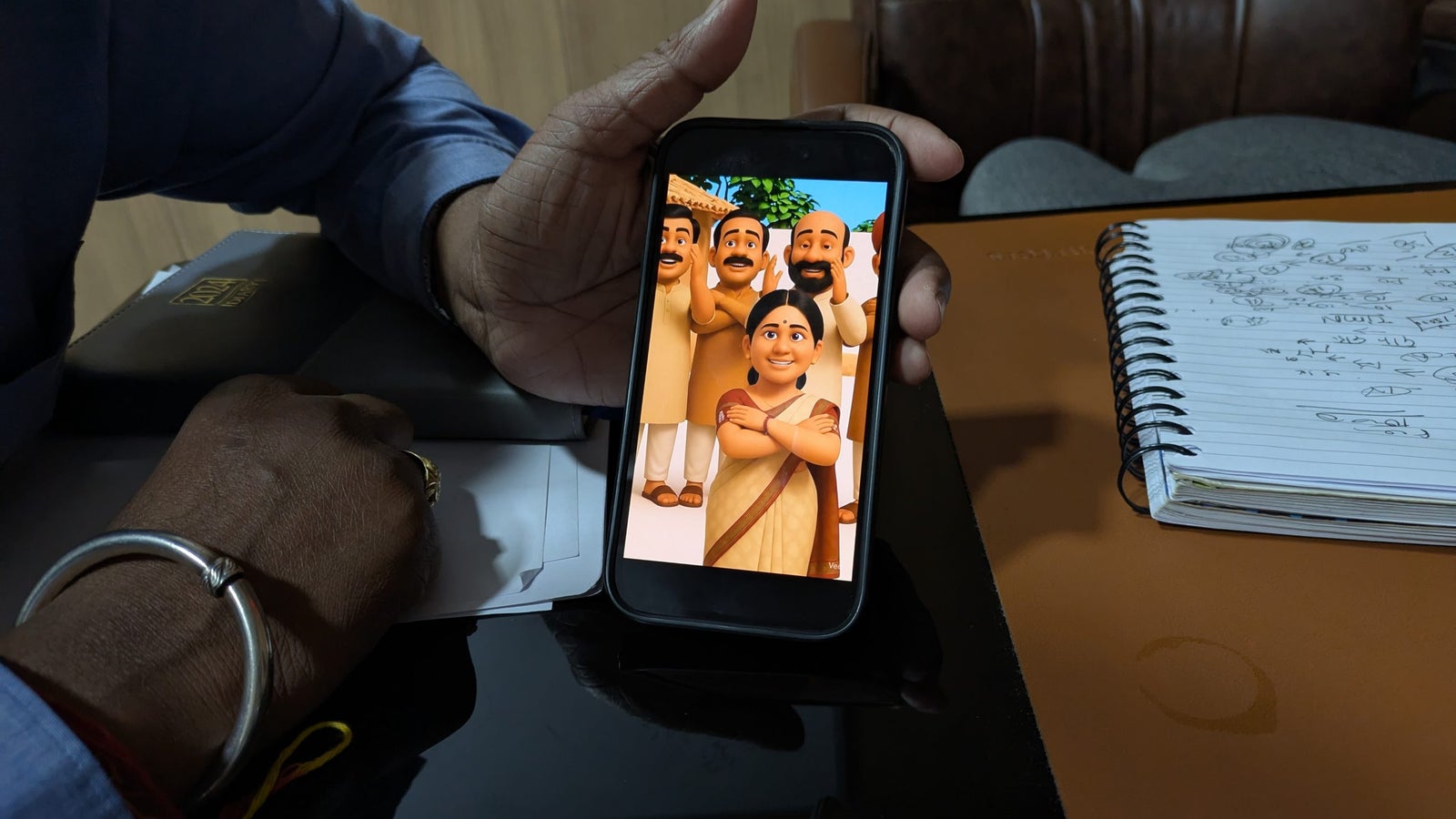
A team of 15 police officers trained in AI kept track “round the clock,” he said. “It is very challenging to monitor and detect AI-generated content.”
Deepfakes of politicians, journalists, and celebrities endorsing and discrediting candidates, and promising freebies circulated ahead of the election. Videos of candidates campaigning in Bihar even when they were not were misleading, voter Pankaj Kumar Singh told Rest of World.
“It was really confusing for us to know what to believe and what not to,” said Singh, 28. “I am tech-literate, so I know what AI is, but my parents and grandparents don’t, and the AI content convinced people in my home and neighborhood that these candidates were on the ground, even when they weren’t.”
For Mayank Bachhal, who worked on the digital campaigns for a few candidates, the AI tools meant his clients did not have to campaign as extensively, he told Rest of World. Traditionally, politicians embark on whistle-stop tours across the state and hold rallies to deliver their message in person.
We were able to save a lot of money by investing in AI tools rather than hiring a lot of people.”
Bachhal, who runs a digital marketing agency in New Delhi, used tools such as ChatGPT and Google AI Studio to analyze data on the state’s population, and built chatbots to deliver personalized messages via WhatsApp and Telegram.
“The chatbots answered all voters’ queries in their own dialect,” Bachhal said. “They were not perfect, but they did the job.” He said the exchanges continued even during the mandatory “silence period” of 48 hours before the poll, when the broadcast of campaign-related activity is not allowed. There is no ban on chatbots.
Chatting with a politically biased AI model is more effective than political advertisements in swaying voters, recent research showed. That AI chatbots are exempt from the ban is not ideal, according to Pushpendra Kumar Singh, a former professor at the Tata Institute of Social Sciences in Patna.
“The silence period that was meant for voters to pause, contemplate, and make their decision is no longer silent,” he told Rest of World. “The magnitude of AI-generated content, the constant bombardment is, in a way, very dangerous because it doesn’t allow you the peace of mind to contemplate, to think, and make your decision in an informed manner.”
In October, India released a draft law to curb “synthetically generated information.”
Fact-checkers also struggled, as at least one in five election-related advertisements and other promotions on social media was AI-generated, Vidya Sagar, who leads a small team of fact-checkers at a local daily in state capital Patna, told Rest of World.
“The major challenge was distinguishing between real and AI content because voice cloning and deepfakes were everywhere and looked very real,” he said.
In October, India released a draft law to curb “synthetically generated information,” which requires the provider and online platforms to clearly identify the material as such. Critics have said the proposed law does not prevent the creation of malicious synthetic media, and does little to mitigate any harms.
In Bihar, the coalition led by the ruling Bharatiya Janata Party won the election. The BJP, which has long been a champion of technology, has been training its workers in the use of AI tools to create images and short videos, Anmol Sovit, the party’s social media head in Bihar, told Rest of World.
The aim is “to create AI-generated content that can appeal to the masses and ensure that our volunteers are not left behind,” he said. “It will help the party in the long run, and we’ve already seen results in Bihar.”
For Divya Gautam, a candidate of the regional Communist Party of India (Marxist-Leninist) Liberation, who lost in the election, it was proof that AI favors bigger and wealthier parties.
“It is really not for candidates like me who do not have money to spend on tech and training,” she told Rest of World. “There is a big divide.”